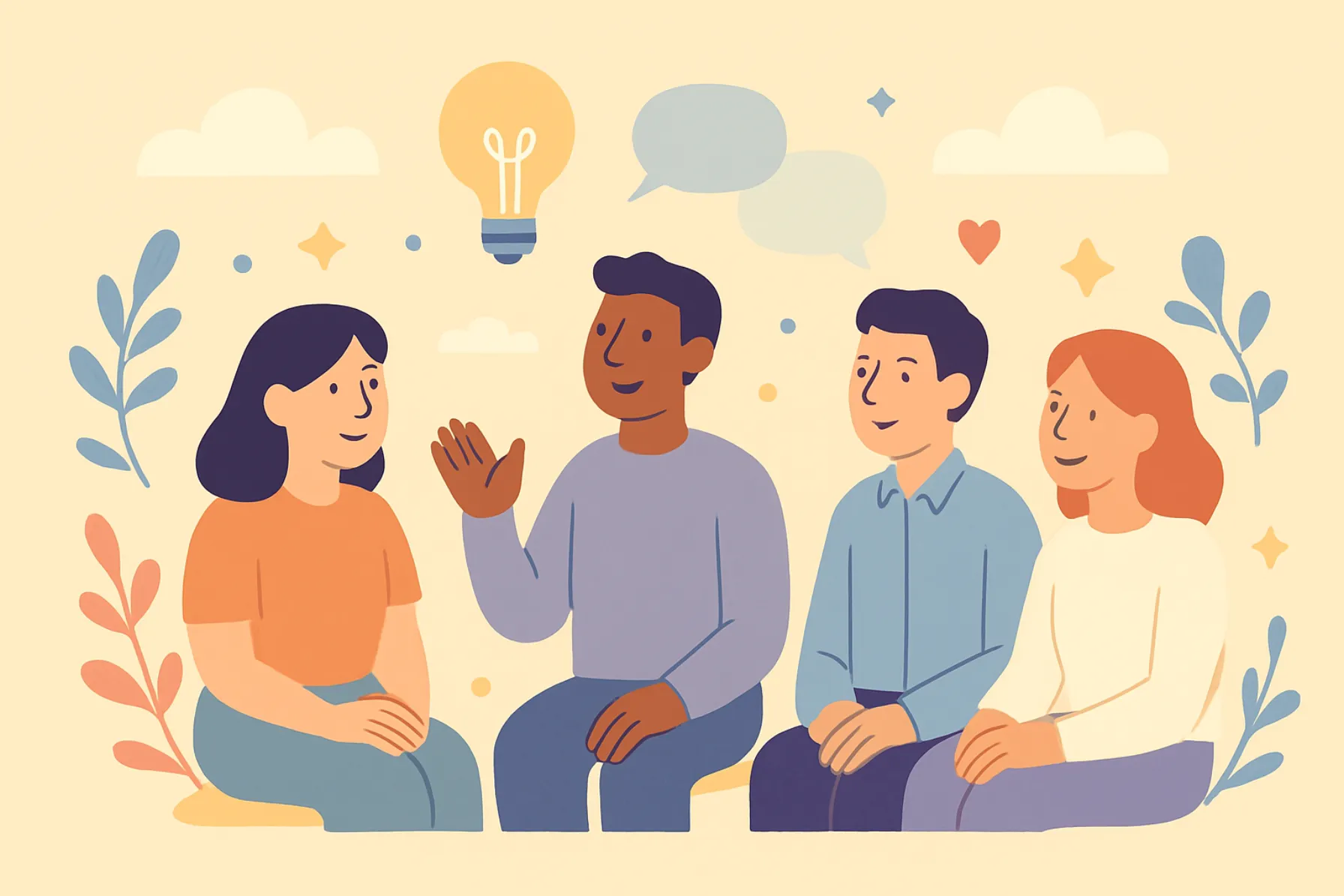
Only half of workers say their manager creates psychological safety on their team. That means in a typical organization, roughly every other employee hesitates before speaking up, raising concerns, or admitting a mistake.
For HR leaders, that gap is a problem. It shows up in engagement scores, exit interviews, and the slow erosion of trust that’s hard to measure but impossible to ignore. When people don’t feel safe, they self-censor. They nod along in meetings while holding back the concern that could have prevented a costly mistake. They leave without telling you the real reason.
The good news: psychological safety isn’t a personality trait or a vague cultural aspiration. It’s a specific, research-backed condition that can be built, measured, and improved.
Here’s what the research says — and what you can actually do about it.
What Is Psychological Safety at Work?
Harvard Business School professor Amy Edmondson coined the term in the late 1990s after studying medical teams in hospitals. She noticed something counterintuitive: the highest-performing nursing teams reported more errors than lower-performing ones. They weren’t making more mistakes — they just felt safe enough to talk about them.
Her definition is straightforward: psychological safety is “the belief that you can speak up with ideas, questions, concerns, or mistakes without fear of repercussions.”
It’s worth being clear about what psychological safety is not. It doesn’t mean avoiding difficult conversations, lowering standards, or being “nice” all the time. Edmondson’s four-zone framework maps this out clearly. Teams can be high on psychological safety and high on accountability — that’s the “Learning Zone,” where people take smart risks and hold each other to high standards. The opposite extreme — high safety but low accountability — is just the “Comfort Zone,” which produces a different kind of dysfunction.
Google confirmed this at scale. Their Project Aristotle research, which studied 180 teams, found that psychological safety was the single most important factor in team effectiveness — more than the team’s composition, seniority, or individual talent.
Why Psychological Safety Matters for Your Organization
The business case is strong and keeps getting stronger.
Performance and innovation. 93% of business leaders agree that psychological safety boosts productivity and innovation. Research from PricewaterhouseCoopers found an average 230% return on every dollar invested in creating a mentally healthy workplace — through improved productivity, fewer compensation claims, and reduced absenteeism.
Retention. This is where the numbers get especially compelling for HR. A 2024 BCG study of roughly 28,000 employees across 16 countries found that 12% of employees with the lowest psychological safety intended to quit within a year. For those in the top tier? Just 3%.
A DEI equalizer. That same BCG research found something remarkable: when leaders create psychological safety, retention increases 4x for women and BIPOC employees, 5x for people with disabilities, and 6x for LGBTQ+ employees. Psychological safety doesn’t just help everyone — it disproportionately helps the groups organizations are working hardest to retain.
Well-being. The APA’s 2024 Work in America survey found that workers with higher psychological safety were far less likely to feel stressed on a typical workday (27% vs. 61%), intend to look for a new job (19% vs. 41%), or experience emotional exhaustion (17% vs. 34%).
All of this connects to employee engagement in a direct way. People who feel safe are people who show up fully — contributing ideas, collaborating honestly, and staying longer. In fact, psychological safety is the single most important characteristic of high performing teams — the foundation that every other team dynamic depends on.
7 Signs Your Team Lacks Psychological Safety
These warning signs are often subtle. They’re the things that don’t happen rather than the things that do.
-
Silence in meetings. People sit through discussions without contributing, even when they clearly have relevant experience. Questions go to the same two or three voices.
-
Feedback only flows downward. Managers give feedback, but no one offers it back. Upward feedback feels risky.
-
Blame culture after mistakes. When something goes wrong, the first question is “who did this?” rather than “what happened and how do we prevent it?”
-
No one asks for help. Team members struggle silently rather than reaching out, even when workload is clearly unsustainable.
-
Artificial agreement. Everyone nods along in meetings, especially when leadership is present. There’s no healthy debate.
-
Unexplained departures. Strong performers leave suddenly. Exit interviews are vague or overly positive — people don’t feel safe being honest even on the way out. This is exactly the kind of pattern stay interviews are designed to catch early.
-
Errors get buried. Mistakes — especially by senior people — are quietly fixed rather than discussed. There’s no learning loop.
If you’re recognizing three or more of these, you likely have a psychological safety gap. The next step is building a deliberate strategy to close it.
How to Build Psychological Safety: A Framework for HR
Building psychological safety isn’t a single initiative. It’s a set of practices that compound over time.
Model vulnerability from the top
This has to start with leaders. When a manager says “I made a mistake on this” or “I don’t know the answer — who can help?” they’re sending a powerful signal. Edmondson’s research on leadership behaviors shows that leaders who frame work as a learning problem — rather than an execution problem — create the conditions for psychological safety.
HR can coach managers on specific behaviors: opening meetings by asking for disagreement, publicly acknowledging their own errors, and thanking people who raise concerns (even inconvenient ones).
Create structured opportunities for voice
Don’t rely on organic conversation. The people most likely to stay silent are often the ones with the most valuable perspectives — newer employees, introverts, people from underrepresented backgrounds. Build systems that ensure every voice gets heard:
- Round-robins in meetings where everyone weighs in before discussion opens up. This simple technique prevents the loudest voices from dominating and signals that every perspective matters.
- Anonymous input channels for sensitive feedback. Sometimes the most important insights come from people who don’t yet trust that speaking up is safe.
- Skip-level meetings so employees can speak with leaders above their direct manager. These conversations surface issues that might not travel up the normal chain.
- Pre-meeting idea submissions so people have time to think before speaking. This is especially valuable for introverts and non-native English speakers who process ideas differently in real-time conversation.
The goal isn’t to create more meetings. It’s to redesign the ones you already have so that participation is the default, not the exception.
Reframe failure as learning
Replace blame with curiosity. Implement blameless postmortems after projects or incidents. The question isn’t “who messed up?” but “what did we learn and what do we change?”
This sounds simple, but it requires real discipline. When a project misses its deadline or a campaign underperforms, the natural instinct is to find someone to hold accountable. Psychologically safe teams still hold people accountable — but they separate the learning conversation from the accountability conversation. First: what happened and what do we change systemically? Then, separately: were there individual performance issues to address?
When this becomes a consistent practice — not a one-off exercise — it fundamentally shifts how people relate to risk. Teams start surfacing problems earlier, when they’re still fixable, instead of hiding them until they explode. This forward-looking approach is at the heart of feedforward, a technique that replaces backward-looking criticism with future-focused suggestions — and it’s far more compatible with psychological safety than traditional feedback.
Build a recognition-rich culture
Recognition and psychological safety are deeply connected. When people see their contributions acknowledged — especially efforts, not just outcomes — they feel valued enough to take risks. Peer-to-peer recognition programs are particularly effective here because they distribute the power to affirm, rather than concentrating it in management.
Be thoughtful about how you recognize. Poorly executed recognition can actually undermine safety. Avoid the common recognition mistakes that make people feel singled out or create unhealthy competition.
Normalize check-ins and stay interviews
Regular 1:1 conversations where managers genuinely ask “what’s getting in your way?” and “what would make this team better?” build trust over time. But the key word is genuinely. If a manager asks for honest feedback and then gets defensive or dismissive, they’ve just proven that speaking up isn’t safe. HR can help by training managers on active listening and by creating accountability for follow-through. (Need inspiration? Here are 65+ one-on-one meeting questions designed to build trust, or our focused list of employee check-in questions for ongoing pulse checks.)
Stay interviews — structured conversations with your best performers about what keeps them and what might push them away — are one of the most underused tools in HR’s arsenal. Unlike exit interviews, which capture insights too late to act on, stay interviews surface concerns while you still have the chance to address them. Skip-level meetings — where senior leaders meet with employees who don’t report to them directly — are another powerful way to build psychological safety by signaling that leadership genuinely wants to hear the truth.
How to Measure Psychological Safety
You can’t improve what you don’t measure. Fortunately, Edmondson’s original research gives us a validated framework.
Edmondson’s Psychological Safety Scale uses statements rated on a 1-5 agreement scale. Key items include:
- “If I make a mistake on this team, it is not held against me.”
- “Members of this team are able to bring up problems and tough issues.”
- “It is safe to take a risk on this team.”
- “It is easy to ask other members of this team for help.”
- “People on this team value others’ opinions, even if different from their own.”
How to administer it:
- Run the survey anonymously — if people don’t feel safe, they won’t be honest about it
- Start with an organization-wide baseline, then drill into team-level data
- Resurvey quarterly or semi-annually to track trends
- Complement with leading indicators: meeting participation rates, idea submission volume, internal mobility, and help-seeking behavior
- Track employee net promoter score (eNPS) alongside psychological safety scores — teams with high psychological safety consistently produce higher eNPS
The scores themselves matter less than the trends. A team scoring 3.2 that moves to 3.8 over six months has built something real.
What to do with the data. Share results transparently with teams — including the uncomfortable numbers. Then work together to identify one or two specific behaviors to change. For example, if “it is safe to take a risk on this team” scores low, the team might commit to running a blameless postmortem after the next project, or the manager might start opening meetings by sharing their own recent mistake. Concrete behavioral commitments are more effective than abstract goals like “improve trust.”
Psychological Safety for Remote and Hybrid Teams
Remote work creates additional challenges for psychological safety. Without hallway conversations, shared meals, or the ability to read body language easily, trust-building happens more slowly. And the cues that signal safety in person — a nodding head, an encouraging smile, a hallway follow-up after a tough meeting — are largely invisible on a screen.
A few remote-specific practices that help:
- Virtual coffee chats or randomized pair-ups that create informal connection
- Camera-optional norms that reduce performance pressure (while finding other ways to stay connected)
- Async-first communication with clear norms that give people time to think before responding
- Team rituals and celebrations — marking milestones, birthdays, and wins with tools like digital group cards keeps the human moments alive even across time zones
The fundamentals don’t change for remote teams. They just require more intentionality, because the informal trust-building that happens naturally in an office has to be designed deliberately in a distributed environment.
Start Building
Psychological safety isn’t a soft skill or a perk. It’s infrastructure. It’s the foundation that determines whether your engagement programs, recognition initiatives, and retention strategies actually work. Research shows it’s one of the most powerful employee engagement drivers — with improvements yielding a 27% reduction in turnover and 12% increase in productivity.
The research is unambiguous: teams with high psychological safety perform better, stay longer, innovate more, and create more equitable workplaces. And unlike many organizational challenges, this one comes with a clear measurement framework and actionable steps.
Start small. Survey one team. Coach one leadership cohort on vulnerability. Implement one blameless postmortem. Then measure what changes. The compounding effect of psychological safety is that each small win makes the next one easier — because people start to believe that speaking up is genuinely welcome.